



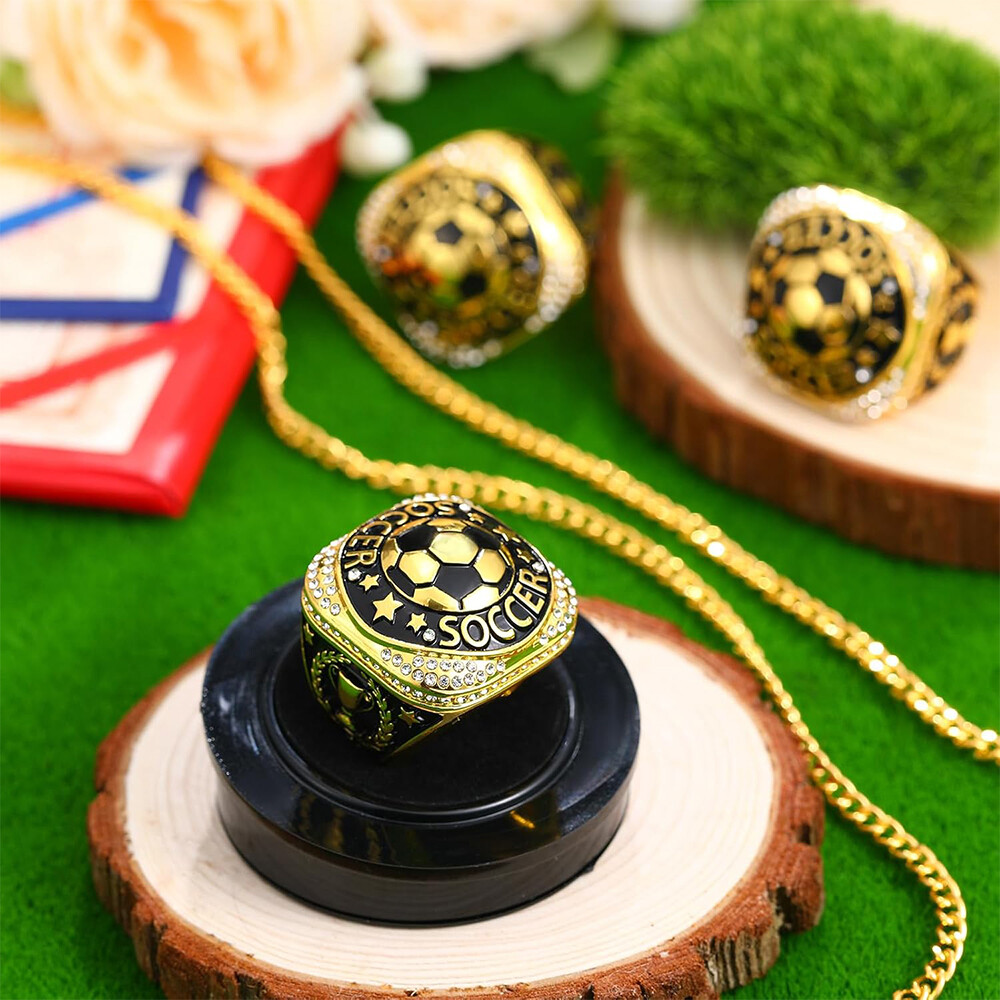
Champion rings are built to symbolize lasting achievement, but how well do they hold up during years of display? For collectors, teams, and brands, durability depends on materials, plating quality, craftsmanship, and storage conditions. Understanding these factors helps information seekers evaluate long-term value and appearance retention before choosing custom champion rings for commemorative or promotional purposes.
In the sports goods sector, champion rings are more than decorative keepsakes. They function as visual assets for trophy rooms, club headquarters, sponsor activations, alumni programs, and limited-edition merchandise collections. For buyers researching long-term display performance, the key question is not only whether a ring looks impressive on day 1, but whether it can still present well after 3, 5, or even 10 years.
For B2B buyers such as teams, event organizers, schools, and corporate sports programs, display durability influences replacement costs, brand perception, and commemorative value. Suppliers with stable production technology, controlled finishing processes, and flexible customization support are usually better positioned to deliver champion rings that maintain their finish and structural integrity over time.
What Determines the Long-Term Durability of Champion Rings?
The durability of champion rings is usually shaped by 4 core factors: base material, plating system, stone setting method, and production precision. A display ring may not experience daily wear like jewelry, but it still faces oxidation, dust buildup, UV exposure, and handling during cleaning or relocation.
Base material affects structure and weight retention
Many custom champion rings in sports commemorative programs are made from zinc alloy, brass, stainless steel, or other metal-based constructions. For long-term display, denser metals often provide better edge retention and reduced deformation risk, especially for oversized ring heads, raised logos, and multi-layer relief details.
A ring displayed in a cabinet for 5 to 10 years should resist shape change under its own weight, especially if the design includes large stones, deep side engravings, or layered nameplates. Material consistency also matters because uneven casting may create weak points in shoulders, bezels, or inner bands.
Why metal density matters in display pieces
In sports award manufacturing, heavier commemorative rings often feel more premium and remain more stable in upright or angled display stands. This is particularly relevant when teams produce rings for championship anniversaries, donor recognition, or executive gifting, where the piece may be displayed continuously under lighting for 8 to 12 hours a day.
Plating quality has the biggest influence on appearance retention
When people ask whether champion rings last, they are often asking whether the surface will fade, tarnish, or discolor. In most cases, the visible lifespan of the ring depends more on plating thickness, surface preparation, and sealing quality than on the base metal alone.
A well-finished sports ring should have uniform plating coverage across corners, recessed logos, side text, and stone borders. Thin or inconsistent coating can show dullness within 12 to 24 months in challenging environments, while better-controlled finishes can retain a clean display look much longer under normal indoor conditions.
The table below outlines how common production factors influence long-term display performance for custom champion rings.
For information seekers, the practical takeaway is clear: champion rings intended for long-term display should be evaluated like premium metal crafts, not just novelty awards. A visually striking design is important, but finish consistency and structural detail usually decide whether the ring still looks premium after several seasons.
Craftsmanship matters as much as materials
Even a strong material can underperform if mold accuracy, polishing, and assembly are inconsistent. In custom sports awards, common weak points include thin shoulders, uneven stone placement, shallow text engraving, and poorly cleaned recessed areas. These flaws may not be obvious in photos, but they become more visible after 6 to 18 months of display.
- Check whether raised logos have crisp borders rather than soft edges.
- Ask if the side panels and ring top are cast as one piece or assembled from multiple sections.
- Confirm whether engraving depth is sufficient for long-term visual readability.
- Review sample images under direct light, not only edited marketing images.
Suppliers with end-to-end support, customization experience, and established quality control processes are often better equipped to maintain consistency across small trial runs and larger bulk orders. This is especially useful for sports organizations that want prototype approval first and then scale to 50, 100, or 500 units.
How Display Conditions Affect Champion Rings Over Time
Even high-quality champion rings can lose visual appeal if display conditions are poor. Indoor environment, cleaning frequency, light exposure, and handling methods all influence how the ring ages. For collectors and sports institutions, proper display planning can significantly extend the ring’s presentable lifespan.
Light, humidity, and airborne contaminants
A ring kept in a sealed showcase at stable room temperature generally performs better than one placed on an open shelf near windows or vents. As a common benchmark, indoor humidity around 40% to 55% is usually easier on metal surfaces than highly damp spaces. Direct sunlight for several hours daily may gradually reduce surface brilliance, especially on certain plated finishes and colored decorative elements.
Dust and airborne oils also matter. Display pieces in gym lobbies, event halls, or school trophy areas can collect more residue than rings stored in private offices. If the ring is cleaned too aggressively every 2 to 4 weeks, micro-abrasion may accelerate finish wear.
Handling and packaging influence preservation
A surprising amount of damage occurs not during display, but during movement between events, exhibitions, and storage. Sports brands and event organizers that use champion rings for recurring promotional installations should consider foam-fitted boxes, microfiber wrapping, and controlled packing methods to prevent scratches on top surfaces and side engravings.
The same logic applies across commemorative sports products. For example, organizers building a complete award line may pair rings with medals for multi-level recognition. In such cases, choosing elaborately crafted metal items with coordinated packaging can improve both visual consistency and storage safety. One example is Global Elite Sports Event Metal Medal Set: Commemorative Set for FIVB Beach Volleyball Tour / Australian Athletics Championships / University Leagues, etc., including maps and sports reliefs. Professional sports event collectible set., which shows how customized metal award products can serve sports events, school activities, and community competitions with collectible value in mind.
The following table summarizes practical display risks and corresponding control measures for champion rings used in sports settings.
This comparison shows that display durability is partly a manufacturing issue and partly an operational one. Buyers who spend time on material and finish selection but ignore storage and cleaning practices may still see avoidable deterioration within a few years.
How to Evaluate Champion Rings Before Ordering
For procurement teams and information researchers, durability assessment should begin before mass production. A structured review process can reduce quality disputes, improve visual consistency, and support more reliable long-term display results.
Key questions to ask a supplier
When sourcing champion rings for sports events, club anniversaries, school leagues, or corporate challenge programs, it helps to ask targeted technical questions rather than relying only on rendered artwork. A supplier that can answer clearly is often more prepared for stable execution.
- What base metal is recommended for the target size and weight?
- How is the plating finish controlled across recessed logos and stone edges?
- Are stones glued, prong-set, or fixed with a combined method?
- Can a physical sample be reviewed before bulk production?
- What inspection points are checked before shipment?
Sample-first ordering reduces risk
For many B2B sports award orders, a small trial run of 1 to 5 pieces is a practical step. It allows the buyer to test finish quality, engraving visibility, color contrast, and display effect in the actual environment. This is especially valuable when the order is intended for VIP recognition, sponsor gifts, or multi-year championship branding.
What procurement teams should compare
Durability should be compared alongside design flexibility, communication speed, and production control. In custom sports goods, long-term value comes from balancing aesthetics, lifespan, and operational efficiency rather than choosing on unit price alone.
- Artwork response and revision turnaround, often within 24 to 72 hours for active projects
- Ability to support both small-batch trial orders and larger repeat orders
- Experience in metal crafts used for commemorative sports goods and corporate gift lines
- Quality control checkpoints before plating, after assembly, and before packing
Manufacturers with nearly 13 years of domestic and foreign trade experience, broad export exposure, and integrated customization support can often help buyers avoid common issues such as weak relief detail, inconsistent finish tone, or packaging that does not protect display surfaces during transit.
Best Practices for Long-Term Display and Brand Presentation
A durable ring should not only survive; it should continue to support the story behind the win. For teams, schools, and sports organizations, the best display strategy combines material quality with thoughtful presentation, so the ring remains an asset instead of becoming a maintenance concern.
Display setup recommendations
If a ring will stay on display for more than 12 months, a covered acrylic or glass case is usually preferable to an open shelf. Soft-contact stands help reduce friction points, and neutral backgrounds often highlight metallic contrast more effectively than bright fabrics or textured surfaces.
For clubs or institutions building a broader awards wall, combining rings, medals, and plaques in a coordinated metal display system can strengthen brand identity. The same customization logic used in champion rings also applies to commemorative medal collections for university leagues, athletics championships, and community competitions, including collectible sets such as the Global Elite Sports Event Metal Medal Set: Commemorative Set for FIVB Beach Volleyball Tour / Australian Athletics Championships / University Leagues, etc., including maps and sports reliefs. Professional sports event collectible set..
Maintenance routines that preserve value
A simple maintenance routine is usually enough. In most indoor sports display environments, gentle dust removal every 30 to 60 days is sufficient. Avoid abrasive cloths, harsh chemical cleaners, or excessive rubbing around stones and raised lettering. If the ring is touched frequently during tours or ceremonies, more frequent inspection may be needed.
For buyers concerned with lifecycle value, the message is straightforward: champion rings can remain highly presentable for years when material selection, finish quality, and display conditions are managed properly. The most reliable results usually come from experienced manufacturers that combine metal craft expertise, customization support, and disciplined quality control from sampling to final packing.
If you are evaluating custom champion rings for teams, commemorative programs, or promotional sports collections, working with a supplier that understands metal craftsmanship and small-to-large batch execution can reduce risk and improve long-term presentation. Contact us to discuss your project, request a customization plan, or learn more about durable sports award solutions tailored to your display and branding goals.
Please give us a message

Hello! How may I help you?
Welcome to our website. We are excited to chat with you!
Contact Us