



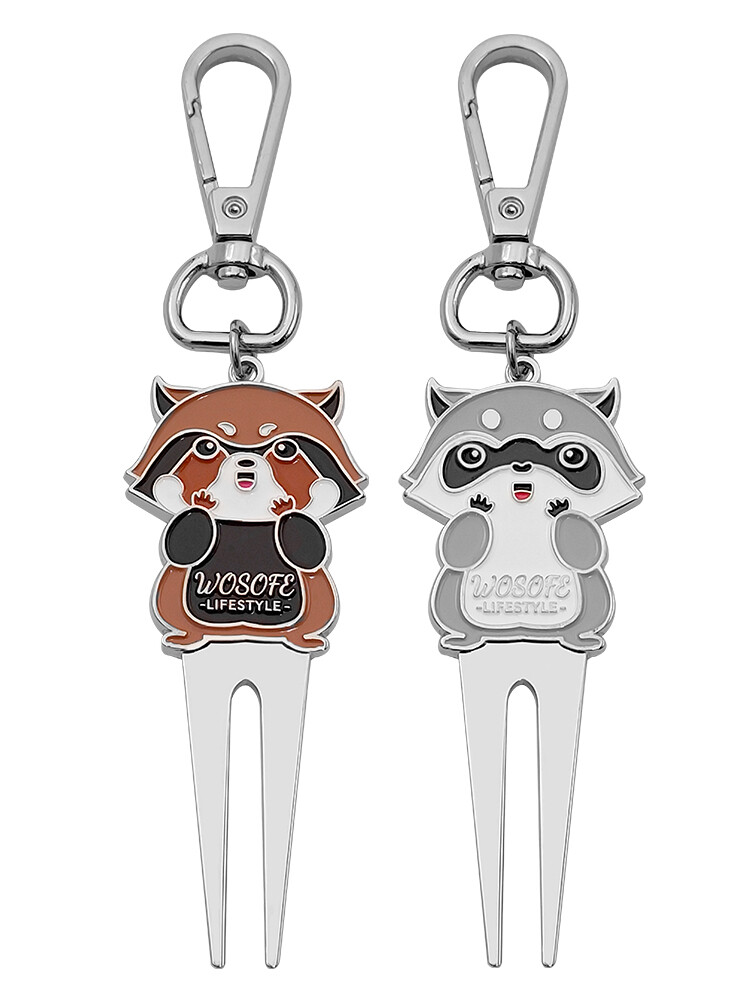
Choosing a reliable golf fork supplier in 2026 is less about finding the lowest quote and more about selecting a partner that can deliver stable quality, customization support, predictable lead times, and controllable long-term cost. For procurement teams and finance approvers, the best supplier is one that reduces sourcing risk, supports small trial orders, and proves its manufacturing and quality control capability with clear evidence. This guide explains how to evaluate golf fork and golf spikes suppliers in a practical way, so you can make a confident purchasing decision.
What buyers really need from a golf fork supplier in 2026
If you are sourcing golf forks in 2026, your core search intent is usually practical rather than informational. You are not just asking what a golf fork is. You are trying to identify a supplier that is reliable enough for real purchasing, cost control, and ongoing supply.
For procurement staff, the main concern is whether the supplier can consistently meet specifications, delivery schedules, and customization requirements. For finance decision-makers, the bigger question is whether the supplier can control hidden costs such as rework, delays, defect rates, unstable pricing, and communication inefficiency.
That means a reliable supplier should be evaluated across five areas:
- Product quality consistency
- Manufacturing and customization capability
- Pricing transparency and cost stability
- Delivery reliability
- Responsiveness and long-term cooperation potential
In short, the right supplier is not simply the cheapest one. It is the one that lowers operational risk while maintaining acceptable total cost.
Start with quality control, not just sample appearance
Many buyers make the mistake of approving a supplier after seeing one good sample. In reality, one attractive sample does not prove batch stability. A reliable golf fork supplier should be able to show how quality is controlled before, during, and after production.
Ask the supplier specific questions such as:
- What materials are used for the golf fork and golf spikes?
- How is plating, polishing, logo application, or coloring controlled?
- What inspection standards are used for dimensions, finish, and durability?
- How are defects handled before shipment?
- Can they provide batch photos, inspection reports, or pre-shipment confirmation?
This matters because golf accessories are often small, branded products where surface finish, edge quality, color consistency, and logo detail directly affect customer satisfaction. Even minor flaws can result in returns, complaints, or damage to your brand image.
A supplier with strong production technology, dedicated quality control, and proper equipment will usually be more dependable than a trader who cannot explain the production process clearly.
Check whether the supplier can handle customization smoothly
In 2026, many buyers are no longer purchasing generic golf forks alone. They want logo engraving, custom shapes, branded packaging, gift-ready presentation, or coordinated accessories. That makes customization capability a major selection factor.
A dependable supplier should be able to support:
- Custom logo development
- Different plating or color options
- Packaging customization
- Small batch trial orders
- Design consultation before sampling
This is especially important for importers, promotional product buyers, golf event organizers, and companies sourcing corporate gifts. A supplier with experience in metal crafts and customized products often has an advantage because golf forks are not just functional tools; they are frequently used as branded merchandise or event gifts.
For example, companies that manufacture custom golf accessories often also support other metal gift products for events and recognition programs, such as Metal Medals for sports events, school activities, corporate challenges, and community competitions. This kind of cross-category experience can be a useful signal that the supplier understands detailed finishing, branding, and customization workflows.
Evaluate total cost, not only the quoted unit price
Finance approvers rarely care only about the purchase price. They care about whether the supplier helps reduce total sourcing cost over time. A low initial quote can become expensive if it leads to defects, delayed shipments, unstable repeat pricing, or extra communication cycles.
When comparing golf fork suppliers, look beyond unit price and review:
- Tooling or mold cost
- Sample charges
- Packaging cost
- Shipping arrangement flexibility
- Defect replacement policy
- Price stability for repeat orders
- Minimum order quantity requirements
A supplier that accepts small batch trial orders may offer better financial control at the early stage, even if the unit price is not the absolute lowest. Trial orders reduce approval risk, give your team real quality data, and avoid larger losses from an untested vendor.
This is often a better decision for both procurement and finance because it shifts supplier evaluation from assumption to evidence.
Delivery performance is a risk issue, not just a logistics issue
Late delivery can create chain reactions: missed promotions, delayed product launches, inventory gaps, and pressure from sales teams or distributors. That is why delivery reliability should be treated as a core supplier qualification standard.
Ask potential suppliers:
- What is the standard lead time for samples and bulk orders?
- How do they handle urgent orders?
- Do they have in-house production or depend heavily on subcontractors?
- Can they provide realistic production schedules?
- How do they communicate if delays happen?
A reliable supplier does not promise unrealistically fast delivery just to win the order. Instead, they provide clear planning, milestone updates, and honest lead time management. That transparency is valuable for procurement planning and budget forecasting.
Look for proof of export experience and communication efficiency
In global sourcing, communication failures can be as costly as manufacturing failures. A supplier may produce acceptable products but still create risk if they respond slowly, misunderstand specifications, or fail to document changes correctly.
Suppliers with years of domestic and foreign trade experience are often better prepared for international purchasing requirements. They usually understand:
- Specification confirmation procedures
- Sampling approval workflow
- Export packaging expectations
- Documentation accuracy
- Cross-border communication timing and problem resolution
This is especially relevant when dealing with custom golf forks, where small specification changes can affect production results. Procurement teams should pay attention to how fast the supplier answers questions, whether quotations are clear, and whether they proactively identify risks before production starts.
How to verify a supplier before placing a larger order
To reduce risk, build a simple qualification process instead of relying on one conversation or one brochure. A practical verification process may include the following steps:
- Request company background and core production scope
- Review product photos, sample quality, and customization cases
- Ask detailed questions about material, finish, and inspection methods
- Compare MOQ, sampling time, bulk lead time, and payment terms
- Place a small batch trial order
- Evaluate communication, quality consistency, and delivery accuracy
- Approve the supplier for repeat or larger-volume orders only after performance review
This process helps both procurement personnel and finance approvers make decisions based on actual supplier behavior rather than sales promises.
Warning signs that a golf fork supplier may not be reliable
It is just as important to know what to avoid. Common warning signs include:
- Prices that are far below market level without a clear reason
- Unclear answers about material or production process
- Inability to support sampling or trial orders
- Slow or inconsistent communication
- No explanation of quality control steps
- Frequent changes in quotation or terms
- Overpromising lead time without operational detail
These signals do not always mean the supplier will fail, but they do suggest higher sourcing risk. In most cases, a stable and transparent supplier creates more value than an aggressive but unpredictable one.
What a good long-term supplier relationship should look like
The best supplier relationship is not transactional only. It should improve over time. A dependable golf fork supplier should gradually become easier to work with, faster to respond, and more accurate in production and documentation.
Over the long term, this can create measurable benefits:
- Lower defect and return rates
- Faster repeat order processing
- More predictable budgeting
- Better support for seasonal or promotional demand
- Smoother development of related customized products
Suppliers with broad experience in metal crafts, customization, and branded gift production may also support future product expansion opportunities. In some cases, buyers who start with golf accessories later source event awards, recognition products, or other custom items from the same vendor, including carefully finished Metal Medals for celebrations, sports competitions, or corporate programs.
Conclusion: choose the supplier that lowers risk and supports growth
In 2026, choosing a reliable golf fork supplier means looking beyond catalog photos and headline pricing. Procurement teams should focus on quality consistency, customization support, clear communication, flexible order options, and realistic delivery performance. Finance decision-makers should assess total cost, pricing stability, and the supplier’s ability to reduce operational risk over time.
The most dependable partner is one that can prove production capability, maintain quality control, support customization, and handle both trial and repeat orders with professionalism. When you evaluate suppliers through that lens, you are far more likely to select a golf fork partner that protects your budget, supports your brand, and strengthens your supply chain.
Please give us a message

Hello! How may I help you?
Welcome to our website. We are excited to chat with you!
Contact Us